Weekly Analysis of The Democracy Clock

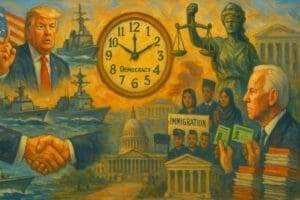
Week 71: Personal Rule Through State Power

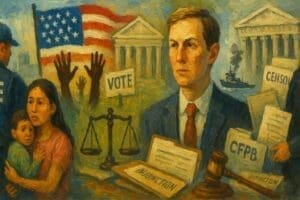
Week 71 brought a small but real forward move as immigration coercion, secrecy, patronage, and leader glorification deepened together. Courts and some state and local officials still checked abuses, but mainly in reactive defense after federal power had already crossed new lines.
Read More »

Week 66: Status as Reach

Power widened through immigration enforcement, secrecy, election pressure, and agency hollowing, while courts and oversight slowed but did not reverse the week’s cumulative democratic erosion.

Read More »

Week 68: Procedure as Pressure

The week’s central movement was consolidation: weakened voting-rights protections, harsher immigration enforcement, retaliatory legal pressure, and war secrecy all thickened existing patterns without moving the clock forward.

Read More »

Week 69: Maps as Emergency Rule

A week of consolidation rather than rupture: voting-rights setbacks were converted into redistricting and election control, agencies were bent toward political ends, and oversight remained active but weak.

Read More »

Week 70: Instability as Governance

A week of surface calm revealed a deeper pattern: instability at the FDA made expert administration look more contingent on loyalty than competence. The clock did not move, but the record thickened around politicized governance inside the state.

Read More »

Week 64: War, Data, and the Quiet Capture

Iran war brinkmanship, SAVE-based voter policing, and Golden Dome patronage entrenched executive and crony power while archives, courts, and surveillance rules bent toward insiders. Courts, cities, and organizers pushed back, but the Democracy Clock’s public time stayed fixed.

Read More »