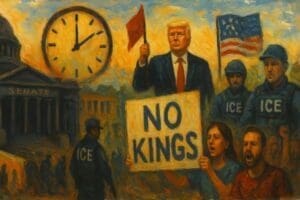
Weekly Analysis of The Democracy Clock

Week 30: Emergency as Method in Washington

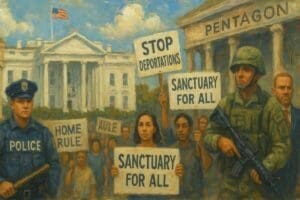
Using D.C. as a proving ground, the administration normalized emergency powers, weaponized immigration and security forces, and deepened capture of data, watchdogs, and public services, while courts and activists mounted uneven resistance.

Read More »

Week 31: Emergency as Governing Method

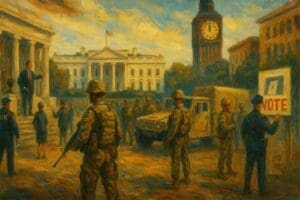
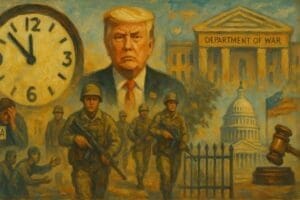
A tiny tick of the Democracy Clock concealed a large shift: emergency policing in D.C., weaponized law, engineered elections, stratified citizenship, and curated memory all moved further toward authoritarian consolidation.

Read More »

Week 35: Security As Presidential Clay

A week of incremental but wide-ranging erosion: militarized policing, weaponized immigration, curated media and history, and politicized science all tightened executive control, while courts and civil society offered only partial, uneven resistance.

Read More »

Week 37: Shutdown as Quiet Purge

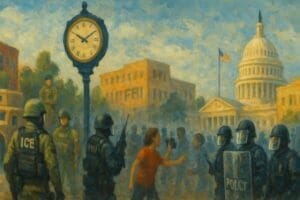
The Democracy Clock barely moved, but power did. Shutdown tools, immigration courts, militarized raids, and AI-driven propaganda were used to purge the civil service, punish disfavored jurisdictions, and stratify rights while institutions struggled to keep pace.

Read More »

Week 38: Shutdown as Weaponry

The clock barely moved, but power did. Militarized immigration raids, shutdown weaponization, and politicized prosecutions deepened executive dominance, while courts, governors, and civil society offered fragmented, rear-guard resistance.

Read More »

Week 39: Shutdown as Weaponized Governance

Congressional paralysis during a prolonged shutdown allowed the Trump administration to centralize fiscal and coercive power, politicize the civil service, criminalize dissent, and tighten control over information, even as courts and civil society mounted scattered but meaningful resistance.

Read More »